Tanzania Sisal: Sourcing Guide
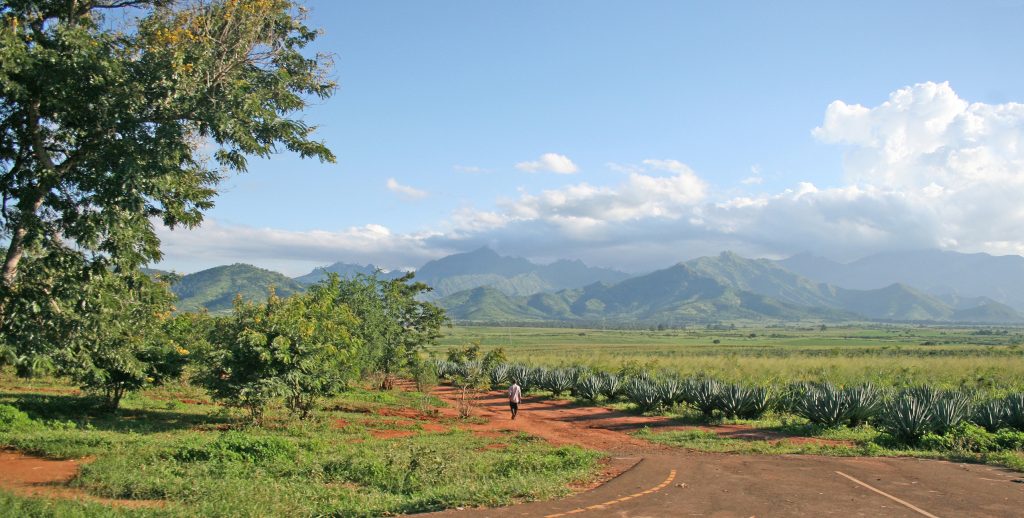
Overview
Sisal (Agave sisalana) was introduced to Tanga in 1893 and by independence (1961) Tanganyika/Tanzania was the world’s largest producer and exporter, peaking around 1964 at roughly 250,000 tonnes/year and employing over a million workers. Nationalisation after the 1967 Arusha Declaration, combined with the rise of synthetic (nylon) substitutes, drove a sharp, long decline. The government designated sisal a “strategic crop” in 2020, and the 2021-2024 administration accelerated investment: new decorticating machines, new smallholder processing centres, and reclamation of roughly 24,161 acres of previously idle investor land in Morogoro Region for redistribution to smallholder growers. The commonly-repeated claim that Tanzania is today the “second-largest producer after Brazil” is widely stated in secondary sources but is in tension with the one primary FAO production table we could verify (2015-16), where Tanzania’s reported output actually exceeded Brazil’s reported raw-fibre figure for the same years — we report this as an open discrepancy rather than settled fact.
Production
FAO’s 2017 Review of the Sisal Market Industry gives 40,000 tonnes (2015) and 36,753 tonnes (2016) for Tanzania. The Tanzania Sisal Board’s own December 2024 magazine cites production rising from 49,752.88 tonnes (2022/23) to 59,416.28 tonnes (2023/24) in its Director-General’s editorial — but a separate article in the very same issue, citing the Ministry of Agriculture’s 2024/25 budget speech, instead gives 56,732.69 tonnes for that same 2023/24 season, a roughly 2,700-tonne discrepancy inside one government publication that we do not attempt to resolve. Tanga Region remains the historic core of the industry and hosts TSB’s own headquarters; new smallholder decortication investment is also reaching Handeni, Korogwe, Mkinga and Lushoto districts, and Pwani, Manyara, Shinyanga and Singida regions are named for further expansion.
Processing & Grading
African sisal (including Tanzania’s) is mechanically decorticated using a water-based process, distinct from Brazil’s dry, largely manual stripping method — a difference FAO credits with African sisal’s superior quality and price premium. The Tanzania Sisal Board Regulations, 1999 set out 11 statutory fibre grades by length and colour (Grade 1, Grade A, Grade 2, 3L, 3S, UG/R, UF, S.C.W.F., plus tow/flume-tow by-product grades). Notably, TSB’s own current (March 2026) price bulletin uses a partly different grade set (adding SSUG and UHDS, dropping some 1999-era names) — indicating the working grading vocabulary has evolved in practice since 1999, though no formal amendment updating the statutory schedule was located.
Trade Data
Two Tanzanian government sources materially disagree on sisal export value and are both reported rather than reconciled: Bank of Tanzania’s Monthly Economic Review (Table A6, “Sisal” traditional-export line) shows US$19.1 million (year ending March 2022) rising to US$33.0 million (2026, provisional); the Tanzania Sisal Board’s own December 2024 magazine instead states fibre-export revenue of roughly US$54.6 million (2022/23) and US$54.8 million (2023/24) — almost double BOT’s figure for the closest comparable period, a gap we could not explain from the documents themselves. TSB states roughly 70% of production is exported to more than 26 countries, with China alone taking about half of Tanzania’s total sisal exports; other named buyers include Nigeria, Ghana, Guinea, Tunisia, Egypt, South Africa and Kenya, with the European market described by TSB as having weakened in recent years.
Prices
Tanzania Sisal Board’s own “Bei Elekezi” (indicative price) bulletin, dated March 2026, is the most current price data located and is published on this portal: export reference prices by grade range from roughly US$650-750/tonne (Tow 2) up to US$1,850-1,950/tonne (grade 3L), with parallel domestic TZS/tonne pricing. Per the Board’s own 1999 Regulations, this bulletin is explicitly indicative and non-binding on growers, processors or sellers. A Bank of Tanzania price line for sisal (Under Grade, US$/kg) was published as recently as January 2022 (US$1.69-1.70/kg, essentially flat year-on-year) but no longer appears in BOT’s April 2026 review — we note the line’s disappearance rather than guess at a current international benchmark.
Estates & Processors
REA Vipingo Group (Amboni Plantations) operates the Mwera, Sakura and Kigombe estates south of Tanga, producing roughly 7,000 tonnes of fibre/year combined, with estates dating back to around the turn of the 20th century. SFI Tanzania Ltd operates the Kwaraguru and Kwamdulu estates near Korogwe/Segera (9,145 ha total, 4,057 ha under sisal, over 1,600 tonnes/year, over 1,200 employees), acquired in 2013 by a Dutch investor. Katani Limited, formed in 1998 following privatisation of state sisal estates, operates the Mwelya factory and a Hale sisal-waste biogas plant, though we could not independently confirm its current operating status in full and list it at lower confidence. Value-addition initiatives documented directly in TSB’s own materials include black-soldier-fly larvae/fertiliser production from sisal waste (a patented NM-AIST research output), a Tanga business-incubation centre for sisal handicrafts launched October 2024, and fibre distribution to women’s/youth entrepreneur groups in Zanzibar for tourism-market handicrafts.
What We Don’t Know
Neither the export-value discrepancy between BOT and TSB, nor a UN Comtrade mirror showing zero Tanzanian sisal exports in 2021 (directly conflicting with both government sources for surrounding years), could be resolved from the documents available to us. No FAOSTAT bulk data and no NBS sisal-specific bulletin were directly queried in this research pass. The regional production-share claims for Tanga (variously stated as 60% or 69% of national output) are unreconciled secondary-source figures, not repeated here as fact.
Current Market
Tanzania
| Market | Type | Grade | Price | Observed | Source |
|---|---|---|---|---|---|
| Tanzania Sisal Board indicative domestic price | Indicative | 3L | TZS 4,450,000.00/tonne | 1 Mar 2026 | Tanzania Sisal Board |
| Tanzania Sisal Board indicative domestic price | Indicative | UG | TZS 3,800,000.00/tonne | 1 Mar 2026 | Tanzania Sisal Board |
| Tanzania Sisal Board indicative domestic price | Indicative | 3S | TZS 3,975,000.00/tonne | 1 Mar 2026 | Tanzania Sisal Board |
| Tanzania Sisal Board indicative domestic price | Indicative | SSUG | TZS 3,225,000.00/tonne | 1 Mar 2026 | Tanzania Sisal Board |
| Tanzania Sisal Board indicative domestic price | Indicative | TOW 1 | TZS 2,100,000.00/tonne | 1 Mar 2026 | Tanzania Sisal Board |
| Tanzania Sisal Board indicative domestic price | Indicative | UHDS | TZS 1,750,000.00/tonne | 1 Mar 2026 | Tanzania Sisal Board |
| Tanzania Sisal Board indicative domestic price | Indicative | TOW 2 | TZS 1,375,000.00/tonne | 1 Mar 2026 | Tanzania Sisal Board |
| Tanzania Sisal Board indicative domestic price | Indicative | UF | TZS 1,850,000.00/tonne | 1 Mar 2026 | Tanzania Sisal Board |
| Tanzania Sisal Board indicative domestic price | Indicative | Flume Tow | TZS 350,000.00/tonne | 1 Mar 2026 | Tanzania Sisal Board |
| Tanzania Sisal Board indicative export price | Indicative | 3L | USD 1,900.00/tonne | 1 Mar 2026 | Tanzania Sisal Board |
| Tanzania Sisal Board indicative export price | Indicative | UG | USD 1,700.00/tonne | 1 Mar 2026 | Tanzania Sisal Board |
| Tanzania Sisal Board indicative export price | Indicative | 3S | USD 1,800.00/tonne | 1 Mar 2026 | Tanzania Sisal Board |
| Tanzania Sisal Board indicative export price | Indicative | SSUG | USD 1,425.00/tonne | 1 Mar 2026 | Tanzania Sisal Board |
| Tanzania Sisal Board indicative export price | Indicative | TOW 1 | USD 975.00/tonne | 1 Mar 2026 | Tanzania Sisal Board |
| Tanzania Sisal Board indicative export price | Indicative | UHDS | USD 900.00/tonne | 1 Mar 2026 | Tanzania Sisal Board |
| Tanzania Sisal Board indicative export price | Indicative | TOW 2 | USD 700.00/tonne | 1 Mar 2026 | Tanzania Sisal Board |
| Tanzania Sisal Board indicative export price | Indicative | UF | USD 1,200.00/tonne | 1 Mar 2026 | Tanzania Sisal Board |
| Bank of Tanzania world commodity price reference | Indicative | UG | USD 1.69/kg | 31 Dec 2021 Historical | Bank of Tanzania |
Production & Trade
| Category | Value | Period | Geography | Source |
|---|---|---|---|---|
| Area Harvested | 81,035 ha | 2024 | National | FAOSTAT (Food and Agriculture Organization of the UN) |
| Area Harvested | 75,963 ha | 2023 | National | FAOSTAT (Food and Agriculture Organization of the UN) |
| Area Harvested | 59,803 ha | 2022 | National | FAOSTAT (Food and Agriculture Organization of the UN) |
| Area Harvested | 49,566 ha | 2021 | National | FAOSTAT (Food and Agriculture Organization of the UN) |
| Area Harvested | 50,034 ha | 2020 | National | FAOSTAT (Food and Agriculture Organization of the UN) |
| Area Harvested | 46,158 ha | 2019 | National | FAOSTAT (Food and Agriculture Organization of the UN) |
| Area Harvested | 57,804 ha | 2018 | National | FAOSTAT (Food and Agriculture Organization of the UN) |
| Area Harvested | 53,260 ha | 2017 | National | FAOSTAT (Food and Agriculture Organization of the UN) |
Figures from different sources sometimes disagree (e.g. sector-body press statements vs. customs trade data) — where that happens we show both, tagged by source, rather than silently picking one. See Data Sources.
Suppliers
6 publicly-sourced suppliers for this commodity — producers, processors, exporters and cooperatives.
DigiFarm Tanzania (sisal.co.tz)
Tanzania Sisal Board-certified sisal producer, processor and exporter headquartered in Dar es Salaam, stating over 5,000…
Mkonge Tanzania Limited
Sisal fibre and yarn manufacturer and exporter based in Tanga Region, operating since 2001 with roughly…
REA Vipingo Group (Amboni Plantations)
Estate group operating the Mwera, Sakura and Kigombe sisal estates south of Tanga, producing roughly 7,000…
SFI Tanzania Ltd
Operates the Kwaraguru (near Korogwe) and Kwamdulu (near Segera) sisal estates in Tanga Region -- 9,145…
Sisalana (T) Co. Ltd
Sisal processor wholly owned by Tanzania's National Social Security Fund (NSSF), operating eight decortication factories plus…
Katani Limited
Processor operating the Mwelya Sisal Factory (Korogwe district) and an estate at Hale (Tanga), including a…
Tanzania Commodities Marketplace — Buy & Sell Sisal
Verified seller companies, buying requirements and direct quotations for Sisal — powered by the network's shared B2B marketplace.
Available Offers
No active Sisal offers are currently published.
Are you a Tanzanian Sisal supplier? List your product.
Buyer Requirements
No open Sisal buying requirements right now.
Looking to buy? Post a buying requirement.
- FAO Review of the Sisal Market Industry (CCP:HFJU 17/2, 2017); Tanzania Sisal Board Jarida la Mkonge magazine Issue 6 (Dec 2024); Tanzania Sisal Board Regulations 1999; TSB Bei Elekezi price bulletin (March 2026); Bank of Tanzania Monthly Economic Review (Jan 2022, Apr 2026); REA Vipingo official history; SFI Tanzania official website