Sisal Fiber Quality & Buyer Specification Guide
What the East African UG-to-No.1 grade scale actually measures, why decortication timing matters more than most buyers assume, what moisture and packaging norms the trade cites, and an honest account of how far Tanzania's sisal industry has -- and hasn't -- recovered from its colonial-era peak. Grading conventions here are industry-wide, not Tanzania-specific unless stated -- see our Tanzania sisal overview for origin, production and market context.

Harvest timing -- why there's no calendar above
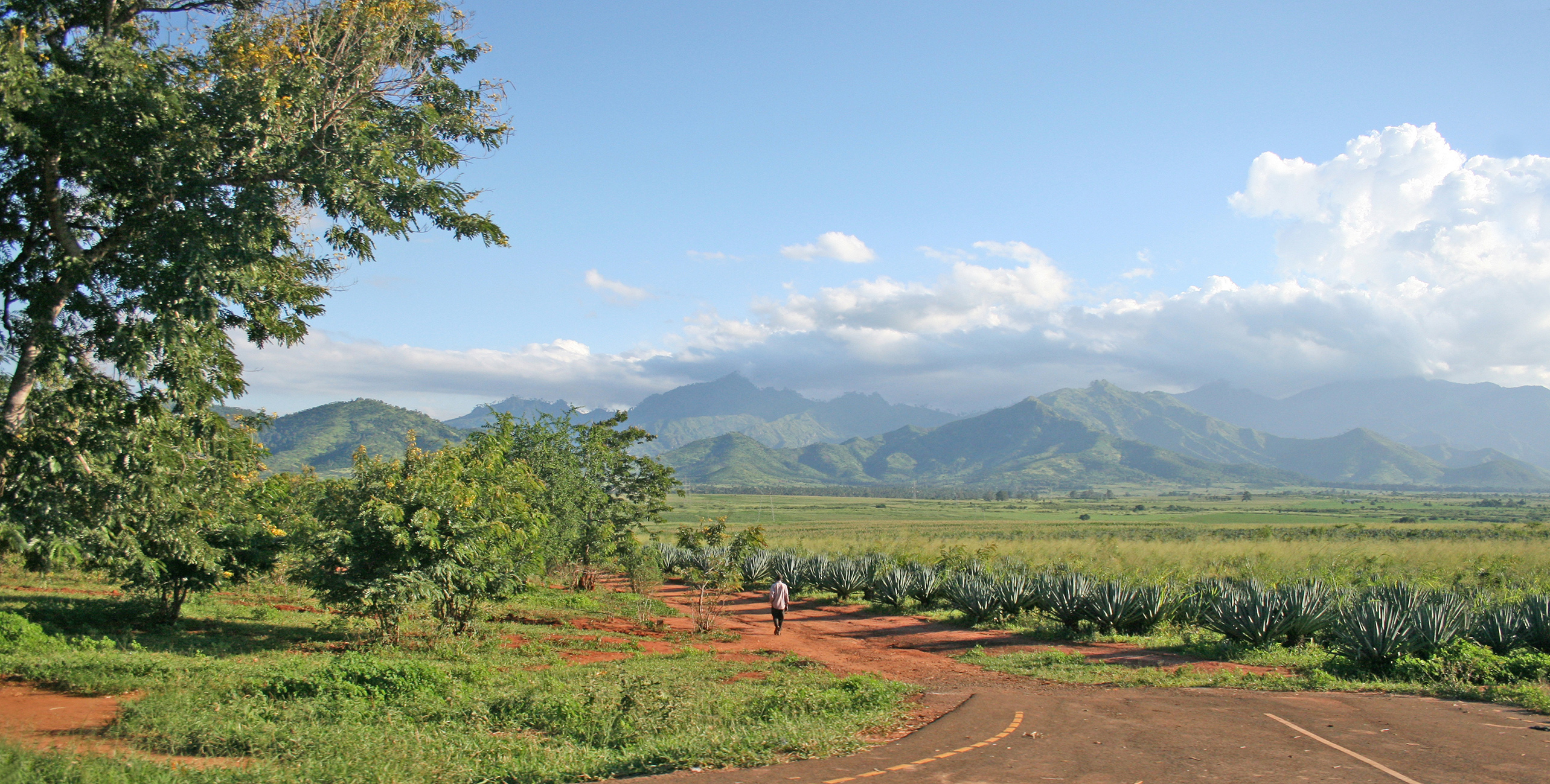
Unlike cashew, vanilla or cotton, sisal is not harvested in a single annual window. A sisal plant's first leaf-cutting happens roughly 24-36 months after field planting; after that, cutting continues every six to nine months for each individual plant across its productive life, with one agronomic source noting that in practice this often means harvesting once or, in some cases, twice a year per plant. Because a commercial estate holds plants of staggered ages planted at different times, the practical effect at the estate or national level is closer to a rolling, continuous harvest than a single season -- one source notes that well-distributed rainfall and a short dry season specifically favour continuous leaf growth and frequent cutting, rather than a concentrated picking window. We found no Tanzania-specific source documenting a genuine monthly peak or secondary season, so rather than invent one, we're stating plainly: sisal harvest in Tanzania is best understood as continuous/rolling, not seasonal, and no harvest calendar is shown on this page for that reason.
Sources: New crop production handbook (fiber crops: sisal, henequen and related hard fibers); SFI Tanzania, "Sisal Plant"; Wikipedia, "Sisal."
Grading -- the East African UG-to-No.1 scale
Sisal is graded primarily by fiber length and colour, assessed visually rather than by an instrument the way cotton's HVI measures micronaire or strength. East African practice uses a scale running from UG (Under Grade) up through No.3, No.3L, No.2 and No.1, with length and colour/defect criteria at each step. Several converging sisal-exporter product listings reproduce the same table, citing it as the East African sisal standard -- we could not reach the standard-setting body's own primary published text during this research pass (the London Sisal Association's page returned an access error), so treat the exact wording below as industry-reproduced rather than independently confirmed against a primary document:
| Grade | Fiber length | Colour / condition |
|---|---|---|
| No.1 | 90cm (3 feet) and upwards | Creamy white to cream; free of defective decortication, properly brushed, free of undecorticated bark, harshness, knots, tousled/bunchy ends and tow |
| No.2 | 75cm-89cm (2.5-3 feet) | Creamy white to cream; same cleanliness criteria as No.1 |
| No.3L | 90cm (3 feet) and upwards | Mixture of whitish and yellowish; same cleanliness criteria |
| UG (Under Grade) | 60cm (2 feet) and upwards | May be brownish/spotted (damaged leaf) or greenish (insufficient water during decortication); black colouring is rejected outright as a sign of rot; same cleanliness criteria otherwise |
We also found references to a "No.3" grade (distinct from "3L") and to an "SSUG" designation produced on some East African farms, but could not confirm either term's precise criteria from a source we could independently verify -- we list them here as terms that exist in the trade, not as confirmed specifications. We could not verify "Flat Brown" or "Fine Brown" as real East African sisal grade names at all during this research pass -- if these appear on a supplier's price list, ask them directly what criteria the name refers to rather than assuming it maps onto the UG/No.1-3 scale above.
Sources: multiple converging sisal-exporter product listings (Globaltextiles.com, Nedvixs, Ricancy, Go4WorldBusiness, Medinol, Lutron Ventures, Manuel Kelprod) citing the same East African grade table; FAO, "Overview of the Sisal and Henequen Industry: A Producers' Perspective" (independently corroborates "East African grade UG sisal fibre" as a real, priced trade term).
Fiber length and strength as quality drivers -- and what isn't graded
Length (above) is the trade's primary, visually-assessed quality driver, because longer fiber spins and ropes better and commands a real price premium. Strength is understood as important in end-use terms, but we found no evidence that East African trade grading itself includes an instrument tensile-strength test the way cotton's HVI reports strength in g/tex -- the grading above is visual (length, colour, cleanliness), not lab-measured. Separately, materials-science literature on sisal fiber (mostly composite-reinforcement research, not trade-grading literature) reports tensile strength in the range of roughly 385-700 MPa for individual fibers, with single-fiber-bundle studies citing tensile strength around 344-577 MPa and Young's modulus in the 9-19 GPa range -- figures that vary considerably by study, treatment and test method, and that describe fiber physics rather than a number a buyer would see quoted on an East African grade certificate. Don't conflate the two: if you need a lab-verified strength figure for a specific shipment, you will need to commission that testing yourself.
Sources: ScienceDirect, "Tensile static and fatigue behaviour of sisal fibres"; ResearchGate, tensile-strength data for sisal-fiber-reinforced composites; multiple materials-science papers on sisal fiber mechanical properties (reported as a range across differing studies, not a single standard).
Decortication -- why timing, not just equipment, determines quality
Decortication is the mechanical process of crushing and scraping cut sisal leaves to remove the pulpy, non-fiber plant material and leave the fiber behind. Two timing-related factors specifically affect final fiber quality:
- Speed from cutting to processing: leaves are ideally decorticated the same day, or within 48 hours of cutting. The natural gummy material in the leaf aids fiber separation while fresh; if it hardens before processing, separating clean fiber becomes harder and quality suffers.
- Machine settings: faster roller speed and a narrower gap in the decorticating (raspador) machine increases fiber breakage, reducing both yield and the proportion of longer, higher-grade fiber recovered.
After decortication the fiber is washed to remove residual waste, then dried, brushed and graded (per the length/colour table above) before baling. A greenish tint in the graded fiber -- the UG-grade color criterion above -- is specifically attributed to insufficient water use during decortication, directly linking a processing-stage choice to the final visible grade.
Sources: ResearchGate/Researcherslinks, "Design and Development of a Portable Sisal Decorticator"; sfitanzania.com, "Sisal fibre extraction."
Moisture & packaging
We did not find a standards-body-published moisture specification for baled sisal fiber, unlike cashew, vanilla or cotton, which each have an internationally published figure. What we found instead were supplier/trade marketing pages citing different ranges -- we report both rather than pick one, and flag plainly that neither is a standards-body figure:
| Source type | Moisture figure cited |
|---|---|
| General sisal-fiber trade guidance | 5%-12% |
| "Premium" sisal-fiber supplier listing | ≤13% maximum |
Packaging: graded fiber is pressed into bales, strapped (steel strapping or wire) for container loading. The most commonly cited export bale weight in supplier listings is 100kg, though several of the same listings note that bale weight is "agreed per order" rather than fixed by any standard -- treat 100kg as a common trade convention, not a regulatory figure.
Sources: various sisal-fiber supplier/exporter product pages (tradeindia.com, pitsonelltd.com, globaltextiles.com) -- trade-practice sources, reported as industry-typical rather than standards-body figures, consistent with our methodology on how we handle this kind of source.
Tanzania-specific: the Tanzania Sisal Board
The Tanzania Sisal Board (TSB) was established under the Sisal Industry Act No.2 of 1997, and describes itself on its own site as "the Supreme Sisal Regulatory Institution in Tanzania." Its stated functions span the same ground cashew's and cotton's boards cover for their own crops: promoting industry development, pest/disease-control regulation, financing or conducting sisal-related research, issuing export and import licenses, regulating quality/marketing/export, registering sisal products and setting producer qualification standards, collecting and disseminating sector information, advising government, and holding levy-setting power over production, sales and exports (subject to ministerial approval). TSB's own site was reachable and current during this research pass, which is itself evidence the Board remains an active institution rather than a defunct one -- though the page we could access did not state current activity levels, staffing, or a recent annual report, so we can't go further than "the institution exists and publishes a current mandate page" as of our research date.
Sources: Tanzania Sisal Board, Mandate; Tanzania Sisal Industry Act, Tanzania Sisal Board Regulations, 1999.
Tanga's real decline -- and a partial, genuine recovery
Tanga region's sisal story is, honestly, one of dramatic decline followed by a modest rebound -- not continued historic dominance, and we think it does readers a disservice to imply otherwise:
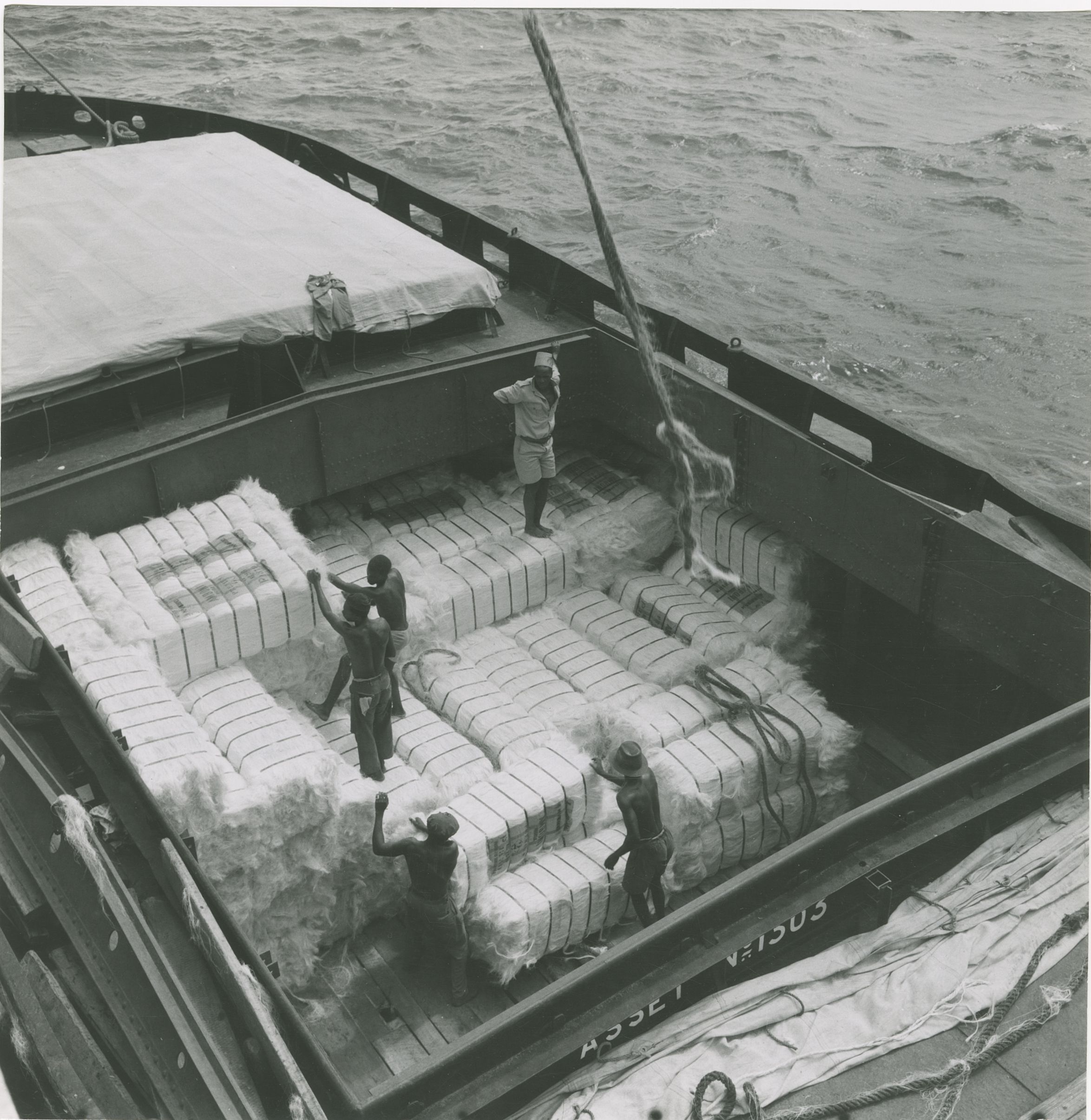
- Colonial-era peak: Tanga's sisal plantations grew from 1 to 54 between 1893 and 1913. By the end of the British Mandate period, Tanga-region production alone reportedly peaked around 208,000 tonnes, representing some 35% of total regional employment at the time. National production peaked in 1964 at roughly 250,000 tonnes, with over 200,000 tonnes produced annually at independence (1961).
- Collapse: national production fell to around 32,000 tonnes by 1985 -- driven by falling world prices as synthetic (nylon) substitutes took share, plus post-independence estate nationalization under Ujamaa and subsequent estate mismanagement.
- Partial recovery: by 2015, national production had climbed back to roughly 40,000 tonnes; more recent figures put it at 39,484 tonnes, up from 36,379 tonnes in 2019. Government targets have called for 120,000 tonnes/year by 2024-2025 (split roughly 60,000 tonnes from plantations and 60,257 tonnes from smallholder farmers across 16 regions) -- we found no source confirming this target was actually reached, so we report it as a stated government goal, not an achieved figure.
Put plainly: even the higher recent figures are roughly 15-20% of the 1964 national peak, and roughly a fifth of Tanga region's own peak alone. Tanzania is genuinely described as the world's second-largest sisal producer today, behind Brazil (global production was about 210,000 tonnes in 2020) -- but that ranking reflects how far the entire global sisal industry has shrunk since synthetic-fiber substitution, not a return to Tanzania's own historic dominance. Leading sisal-growing regions today are reported as Tanga, Morogoro, Kilimanjaro, Coast, Lindi and Mtwara, with Tanga still described as where most of the country's sisal is produced -- a real regional leadership position, just at a much smaller absolute scale than the colonial-era figures above.
Sources: Wikipedia, "Sisal production in Tanzania"; Academia.edu, "Mastering the Landscape? Sisal Plantations, Land, and Labor in Tanga Region, 1893-1980s"; The Citizen, "Tanzania eyes 300 percent hike of sisal yield in three years" and "How sisal became Tanzania's ideal green crop"; FurtherAfrica, "Tanzania eyes 120,000 tonnes of sisal production a year by 2025"; CNN, "Sisal: The most useful plant you've never heard of."

Modern resurgence -- genuine, documented applications beyond rope and twine
Traditional uses (rope, cordage, twine, carpets, bags, sacks, low-density cords) remain real demand drivers, and sisal's traditional use list genuinely extends to niche items like dartboards. Beyond that, several newer applications are documented in materials-science and trade literature, not just promotional claims:
- Biocomposites: sisal fiber is used as a reinforcement replacing fiberglass in automotive components and, per one source, in commercial aircraft components -- cited for its combination of tensile strength, abrasion resistance and biodegradability relative to synthetic reinforcement fibers.
- Geotextiles: sisal is used in land-reclamation schemes and slope-stabilization for road construction.
- Nonwovens and construction: cited as a reinforcement fiber in needlepunched nonwovens and in construction/civil-engineering and insulation applications.
These are real, cited applications -- but they describe where demand could come from, not a confirmed current breakdown of Tanzania's actual export volume by end use; we did not find data splitting Tanzania's sisal exports between traditional cordage and these newer composite/geotextile markets, so don't read this section as proof that the newer uses already dominate Tanzanian sisal's actual trade.
Sources: ScienceDirect, "Sisal fibre and its composites: a review of recent developments"; FiberJournal, "Africa's Untapped Biofiber Economy"; CNN, "Sisal: The most useful plant you've never heard of"; Textile Blog, "Sisal Fiber: Properties, Production Process and Uses."
Export documentation & HS code
Sisal and other textile fibers of the genus Agave, raw or processed but not spun (including tow and waste), fall under HS 5304 (subheadings 530410 for raw fiber, 530490 for other/processed forms). Standard export documentation -- Commercial Invoice, Packing List, Bill of Lading, Certificate of Origin, phytosanitary certificate where required -- follows the same general pattern as other Tanzanian agricultural exports; we did not find a sisal-specific documentation requirement published by TSB distinct from the general export-permit/licensing power described in its mandate above. See our general Incoterms for Commodity Buyers guide for the cross-commodity detail.
Source: HS Code / HSN classification references (Credlix, StatCan SCG 2001, Cybex) for heading 5304.
Buyer specification checklist
Worth putting in an RFQ or purchase order, whether or not every field applies to your order:
- Grade -- quote against the UG/No.3L/No.2/No.1 scale above, and ask the supplier to confirm which standard's wording they're grading against if "Flat Brown," "Fine Brown" or other non-standard names appear on a price list.
- Fiber length -- a minimum in cm, consistent with the grade table.
- Colour -- creamy white/cream for No.1-No.2; explicitly reject black-colored fiber (a rot indicator) regardless of grade claimed.
- Moisture -- request the supplier's own test figure; there is no standards-body number to cite by default (see above).
- Strength, if relevant to your end use -- request lab test data; East African trade grading itself does not include an instrument strength test.
- Packaging & bale weight -- confirm directly; 100kg is common but not guaranteed.
- Intended end use -- traditional cordage/carpet vs. composite-reinforcement/geotextile use may carry different real-world quality priorities even at the same nominal grade.
- Destination & Incoterm -- see our Incoterms for Commodity Buyers guide.
Sample & inspection guidance
- Fiber length -- measure against the grade claimed; a supplier's grade name is a starting point, not a guarantee.
- Colour -- creamy white/cream for top grades; reject black fiber outright (rot); brownish/greenish tint signals UG-grade decortication issues, not necessarily a defect if UG is what you ordered.
- Cleanliness -- check for undecorticated bark fragments, knots, tousled or bunchy ends, and tow (short waste fiber) mixed into the bale.
- Odor/condition -- musty smell or visible mold can indicate poor drying before baling.
- Bale condition -- intact strapping, no obvious moisture ingress.
A visual/handle sample check is a screening step, not a substitute for laboratory testing -- moisture percentage and any instrument strength figure you require will need lab equipment to confirm, not inspection by eye. Our general Quality Inspection & Pre-Shipment Verification guide covers the wider pre-shipment inspection process that applies across commodities, including sisal.
Full Tanzania sisal profile
Origins, production regions, decortication in practice, and market/trade data with sources.
Read the full profile →Suppliers
DigiFarm Tanzania (sisal.co.tz)
Tanzania Sisal Board-certified sisal producer, processor and exporter headquartered in Dar es Salaam, stating over 5,000…
Mkonge Tanzania Limited
Sisal fibre and yarn manufacturer and exporter based in Tanga Region, operating since 2001 with roughly…
REA Vipingo Group (Amboni Plantations)
Estate group operating the Mwera, Sakura and Kigombe sisal estates south of Tanga, producing roughly 7,000…
SFI Tanzania Ltd
Operates the Kwaraguru (near Korogwe) and Kwamdulu (near Segera) sisal estates in Tanga Region -- 9,145…
Sisalana (T) Co. Ltd
Sisal processor wholly owned by Tanzania's National Social Security Fund (NSSF), operating eight decortication factories plus…
Katani Limited
Processor operating the Mwelya Sisal Factory (Korogwe district) and an estate at Hale (Tanga), including a…
Last reviewed 8 October 2026. Sources cited inline above; see also Data Sources and Methodology for how we handle disagreeing figures and unverifiable claims.